Have you ever craved a destination that feels entirely your own? A place where the relentless buzz of city life, the endless pinging of notifications, and the crowded tourist traps fade into a profound, echoing silence? If you are planning a trip to northern Pakistan, you have undoubtedly heard of the majestic Hunza Valley, the sprawling Deosai Plains, and the vibrant Skardu city. But tucked away just a few hours from the heart of Skardu lies a secret that is quietly waiting to be discovered.
Welcome to Basho Valley.
Often overshadowed by its more famous neighbors, Basho Valley (sometimes spelled Bashu) is an untouched masterpiece of Gilgit-Baltistan. If you are looking for an excuse to pack your bags, lace up your hiking boots, and take a leap into the raw, unfiltered beauty of the Himalayas, this is it. Here is everything you need to know about Basho Valley, and why it absolutely deserves the top spot on your bucket list.
What Does “Basho” Mean?
Before you even set foot in the valley, its name tells a story. In the local Balti language, “Basho” translates to “raisin.” The moment you begin your journey, you will understand why. The lower altitudes and hillsides of this region are uniquely fertile, allowing grapevines to flourish in the crisp mountain air. For generations, the local Balti families have harvested these grapes, drying them in the sun to create sweet, rich raisins. It is a beautiful testament to how the land and the people here are deeply intertwined.
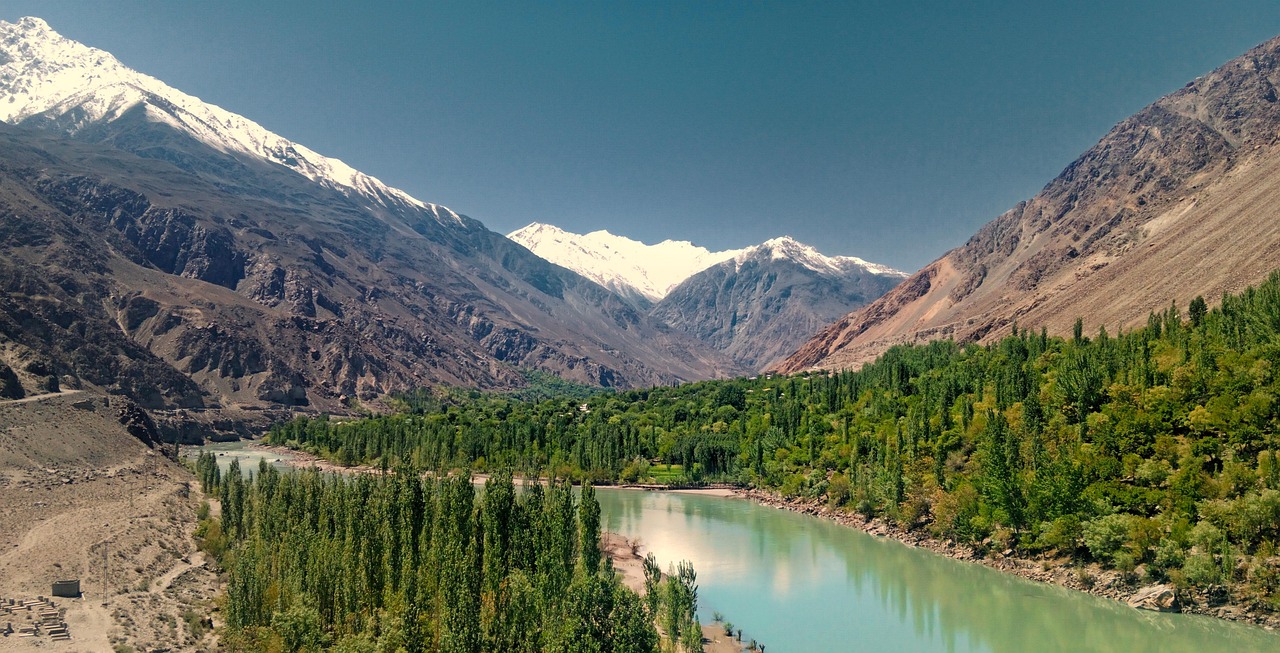
But Basho offers much more than just a sweet harvest. It is a multi-tiered ecological wonderland that transitions from roaring rivers to dense ancient forests, culminating in lush alpine meadows surrounded by snow-capped peaks.
The Journey is the Adventure
Let’s be clear: getting to Basho Valley is not a simple walk in the park, and that is exactly what makes it so special. Because it requires a bit of effort to reach, it naturally filters out the casual tourists, leaving the valley pristine, wild, and uncrowded.
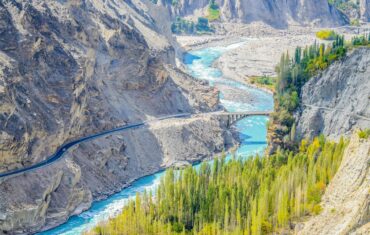
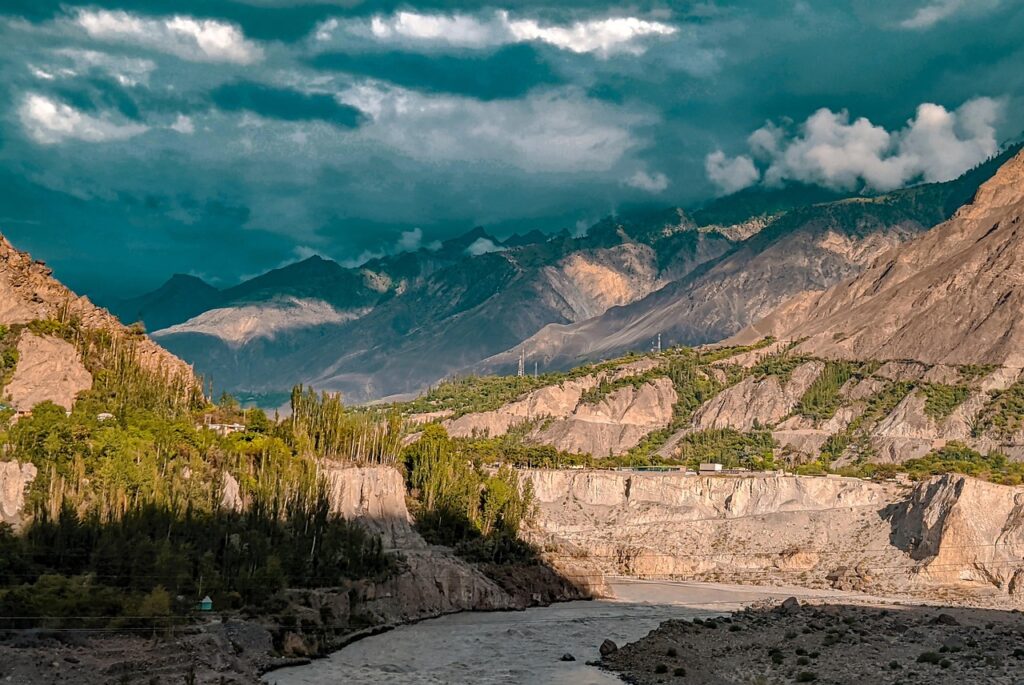
Basho Valley is located about 40 to 45 kilometers away from Skardu city, in the Rondu District. Your adventure begins with a relatively smooth one-hour drive along the Jaglot-Skardu Road (JSR). As you trace the path of the mighty Indus River, the landscape is stark, rocky, and dramatic.
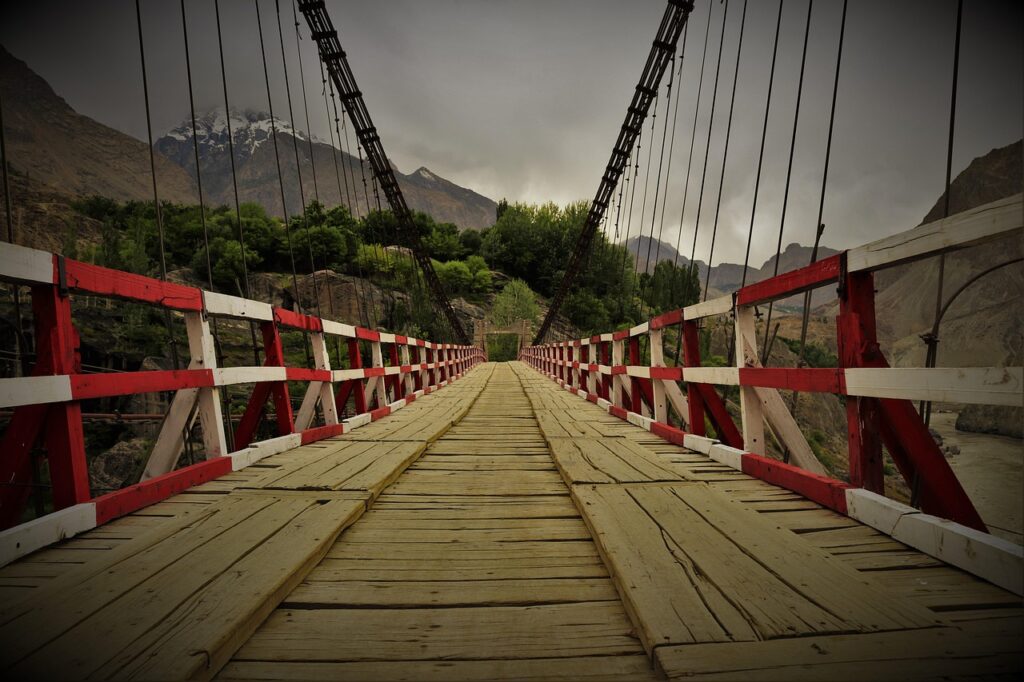
Then, you reach the turning point: The Basho Bridge.
This is where the adrenaline kicks in. The Basho Bridge is a traditional, wooden suspension bridge that hangs precariously over the roaring gray waters of the Indus River. It creaks, it sways, and it demands respect. Crossing this wobbly bridge is an initiation of sorts—a gateway separating the civilized world from the untamed wilderness.
Once you cross the bridge, the paved roads end. You will need to switch to a 4×4 jeep (which you can easily hire from Skardu or right at the bridge). The next 10 kilometers will take you about 1.5 to 2 hours. The jeep track is steep, narrow, rocky, and incredibly bumpy. You will wind your way up a massive 3,500-foot elevation gain, passing through tiny, picturesque villages, dodging grazing cattle, and crossing old wooden planks without railings over gushing glacial streams. It is a rugged, heart-pounding ride, but every jolting turn offers a view more spectacular than the last.
Arriving at Sultanabad Meadows: A Slice of Heaven
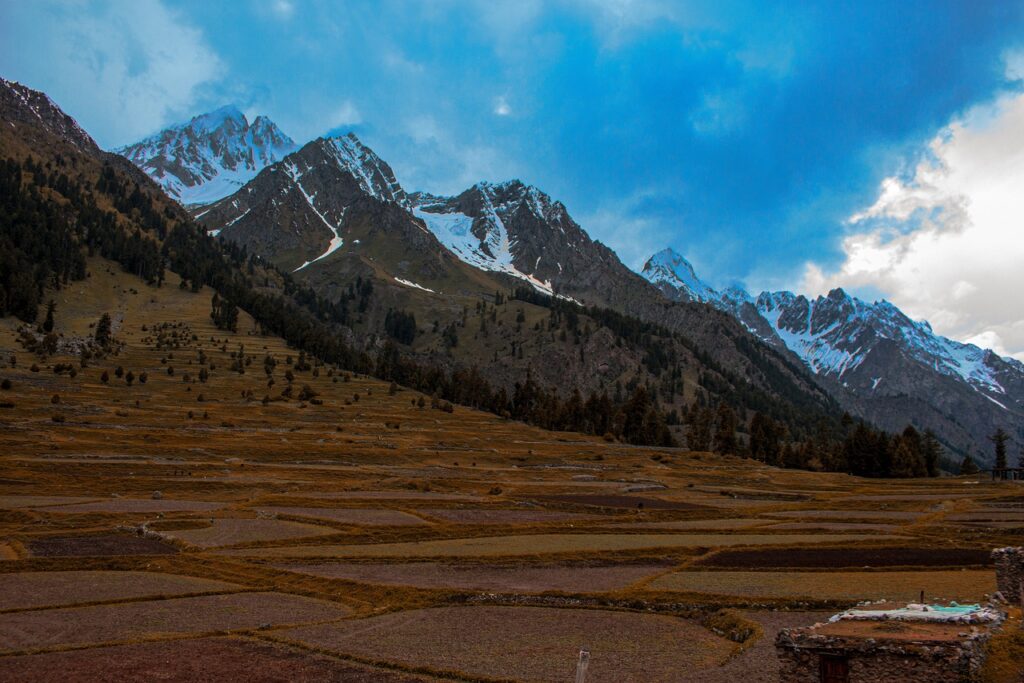
After the intense, bone-rattling jeep ride, the landscape suddenly breaks open. You leave the jagged, arid gorges behind and emerge into what feels like a completely different world.
This is the heart of Basho Valley, often referred to by locals as Sultanabad Meadows.
Imagine sprawling, vibrant green fields rolling out beneath towering, snow-capped mountains. In the summer, these meadows explode with color as hundreds of wildflowers—primulas, edelweiss, and forget-me-nots—bloom across the grass. A crystal-clear, icy glacial stream cuts right through the center of the valley, providing a soothing, constant soundtrack of rushing water.
Unlike the increasingly commercialized areas of the north, Basho is gloriously empty. There are no massive hotel chains, no construction cranes blocking the sky, and no polluted streams. The air is incredibly crisp, carrying the earthy scent of pine and juniper trees. It is the kind of natural beauty that forces you to put your camera down and simply breathe.
Top Things to Do in Basho Valley
Basho is not a place where you rush through a checklist of tourist traps. It is a place to slow down, explore, and reconnect with nature. Here is what you should do once you arrive:
1. Camp Under the Milky Way
While you can visit Basho as a day trip from Skardu, spending the night is highly recommended. Set up a tent right on the soft grass of the Sultanabad Meadows. Because the valley is completely off the grid (you won’t find mobile signals here), there is absolutely zero light pollution. When the sun dips below the mountains, the sky comes alive with an impossible number of stars. You can clearly see the sweeping arc of the Milky Way galaxy. Build a small bonfire, share stories with the incredibly hospitable local villagers, and fall asleep to the sound of the wind in the pines.
2. Hike to Camel Rock and Chocolate Rocks
If you are itching for some movement after the long drive, Basho offers excellent hiking opportunities for all skill levels. A popular, easy trek is the 20-minute walk to Camel Rock, a massive natural stone formation that perfectly mimics a resting camel. For geology enthusiasts, the unique, dark, blocky formations known locally as the Chocolate Rocks are a must-see.
3. Explore the Ancient Pine Forests
As you walk higher up from the meadows, you will enter dense forests of ancient pine and juniper trees. Some of these trees have been standing for over a century. The forest floor is soft with fallen needles, and the canopy provides a cool, shaded retreat from the high-altitude sun.
4. Chase the Basho Waterfall
Follow the sound of crashing water and you will discover the Basho Waterfall. Fed directly by the melting glaciers high above, the water here is freezing, pure, and safe to drink. It is a fantastic spot for photography or just sitting quietly on a boulder to absorb the sheer power of the mountain runoff.
5. Spot Rare Wildlife
Basho Valley is a sanctuary for some of Pakistan’s most magnificent wildlife. If you are quiet and have a good pair of binoculars, you might spot the majestic Himalayan Markhor (Pakistan’s national animal) or Asiatic Ibex navigating the steep, rocky cliffs. The forests are also home to musk deer, red foxes, and occasionally, Himalayan brown bears. Look up, and you will likely see golden eagles soaring on the thermal currents.
Practical Travel Guide: How to Plan Your Trip
Ready to pack your bags? Here are the essential tips to ensure your Basho Valley trip is a success.
The Best Time to Visit
While Basho is technically accessible year-round, the best time to visit is from late May to early October. During these peak summer months, the weather is pleasant (ranging from 15°C to 25°C during the day), the wildflowers are in full bloom, and the treacherous jeep track is clear of heavy snow. If you want to witness the valley turn into a sea of liquid gold, visit in October for the autumn foliage.
What to Pack
The weather in the mountains is notoriously unpredictable. Even if you are visiting in July, the nights in Basho drop to near-freezing temperatures.
- Layers: Bring warm jackets, thermal wear, and thick socks.
- Footwear: Sturdy, waterproof trekking boots are mandatory. The terrain is uneven and muddy near the streams.
- Power & Light: Bring fully charged power banks and headlamps. There is no electricity to charge your devices.
- First Aid: The bumpy ride can cause motion sickness, and the altitude (around 10,000 feet) might cause mild headaches. Bring a basic first-aid kit, altitude sickness pills, and plenty of water to stay hydrated.
Eco-Tourism: Leave No Trace
The pristine nature of Basho Valley is its greatest asset, and it is our collective responsibility to keep it that way. The local Balti people are incredibly welcoming, but their land is sacred. Bring trash bags with you. Do not leave a single plastic wrapper, bottle, or piece of tissue paper behind. Respect the wildlife, stay on marked trails, and ensure your campfire is completely extinguished before you leave.
The Final Verdict: Why You Need to Go
In an age where travel is often defined by perfectly curated social media posts and crowded landmarks, Basho Valley offers an antidote. It is rugged, challenging to reach, and stripped of modern luxuries. But in return for your effort, it gifts you an experience of profound peace and awe.
Taking a trip to Basho Valley is not just about checking another location off a map; it is about feeling small beneath towering peaks, drinking water straight from a glacier, and finding a quiet corner of the world that still belongs entirely to nature.
So, when you book your tickets to Skardu this year, skip the crowded tourist hubs for a day. Rent a 4×4, brave the wobbly hanging bridge, endure the rocky climb, and let the hidden paradise of Basho Valley take your breath away. You won’t regret it.